Hanzi Forge gives you a hand of radicals and components. Your job is to compose real characters — earning points for every part you place, uncovering meanings as you go.

Scrabble and Wordle are beautiful — for alphabets. Chinese writing is built from components that combine into meaning. Hanzi Forge is designed around that truth.
Every build is verified against the actual composition of Chinese characters. No invented words, no fake parts.
84 components per hand. Each choice opens new possibilities and closes others. Skill grows across hands.
Every finished character reveals its pinyin and English meaning. You build your vocabulary without drills.
A single-player game with no friction. Nothing to buy, nothing to unlock — just the game, and your hand.
Drag components into the build area in correct stroke order. Lock in a character to score points. Rarer parts and multi-element builds score higher. Finish the hand when no more characters can be built.
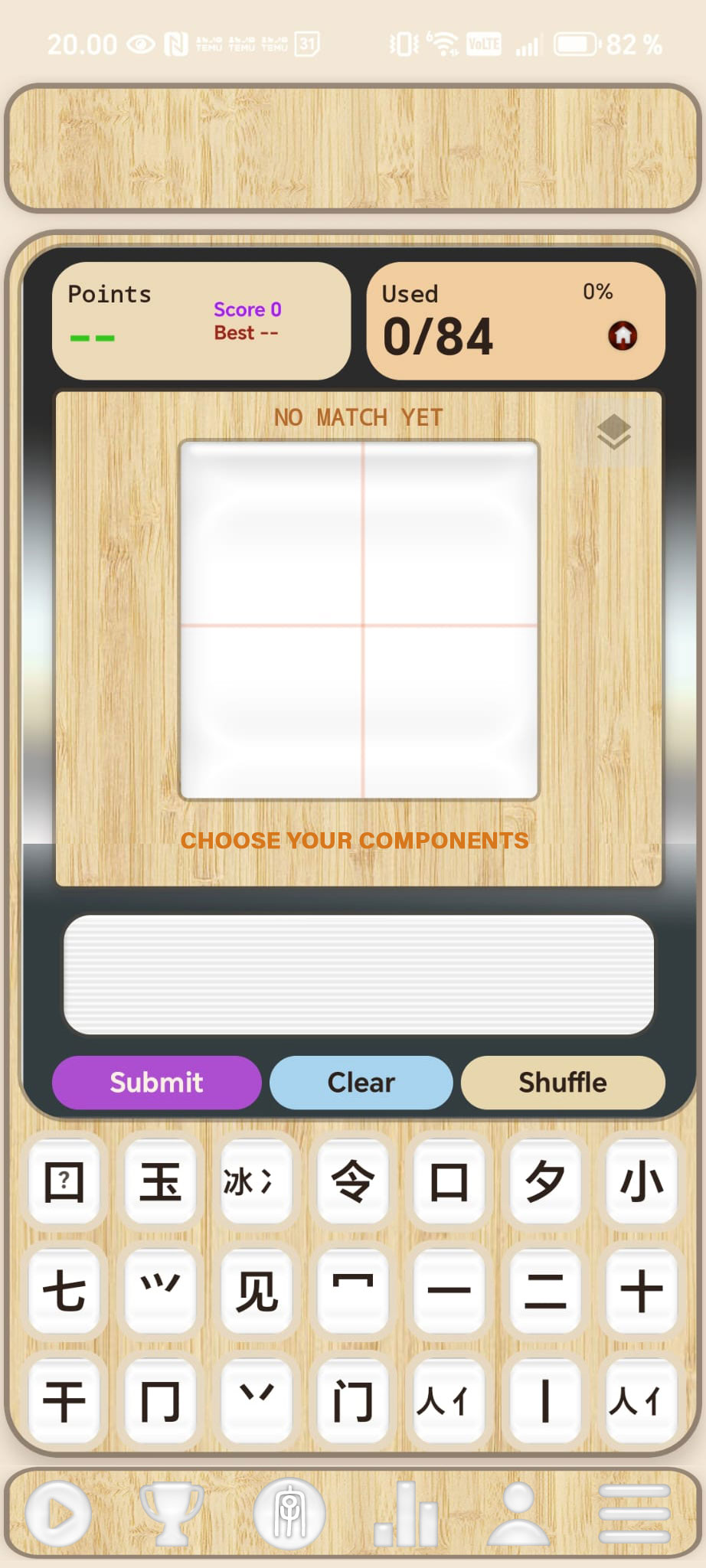
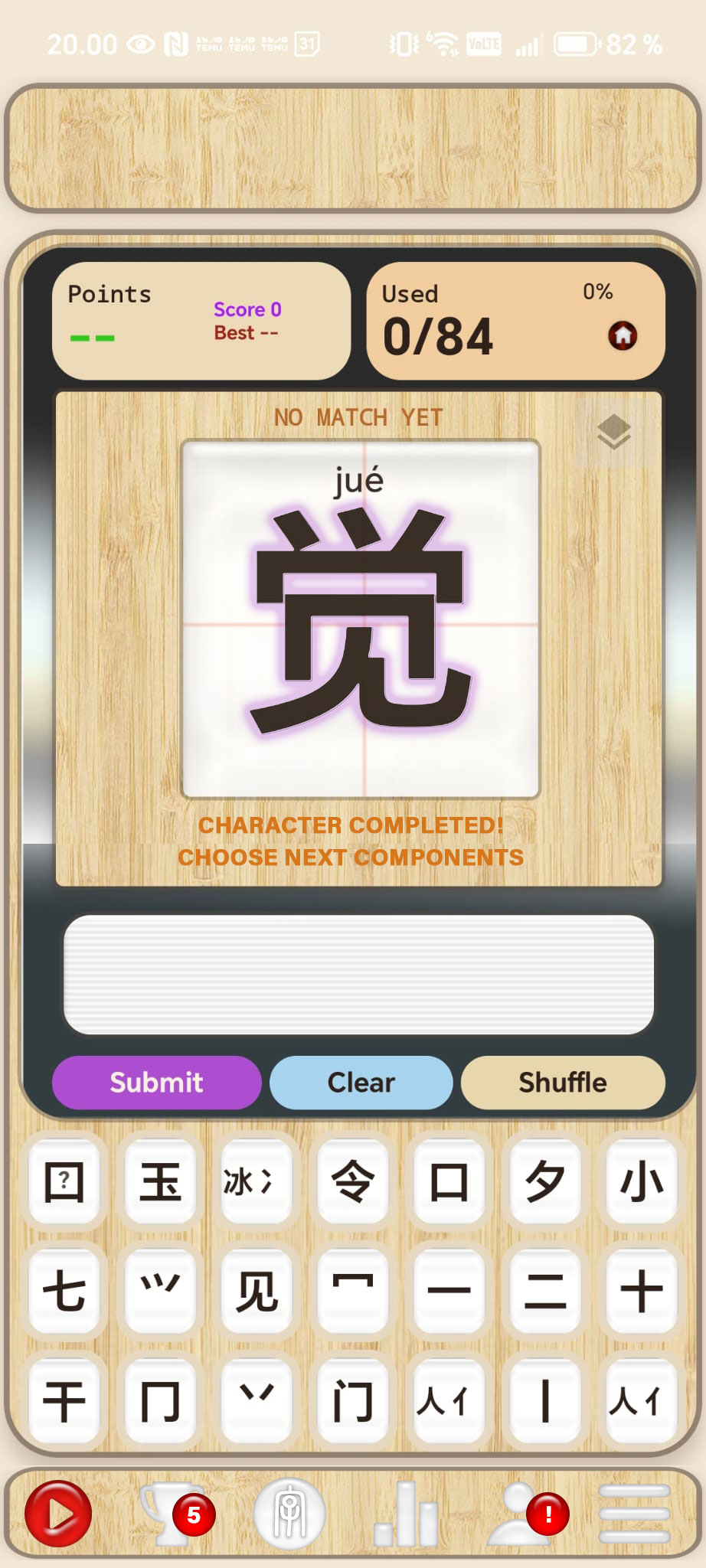
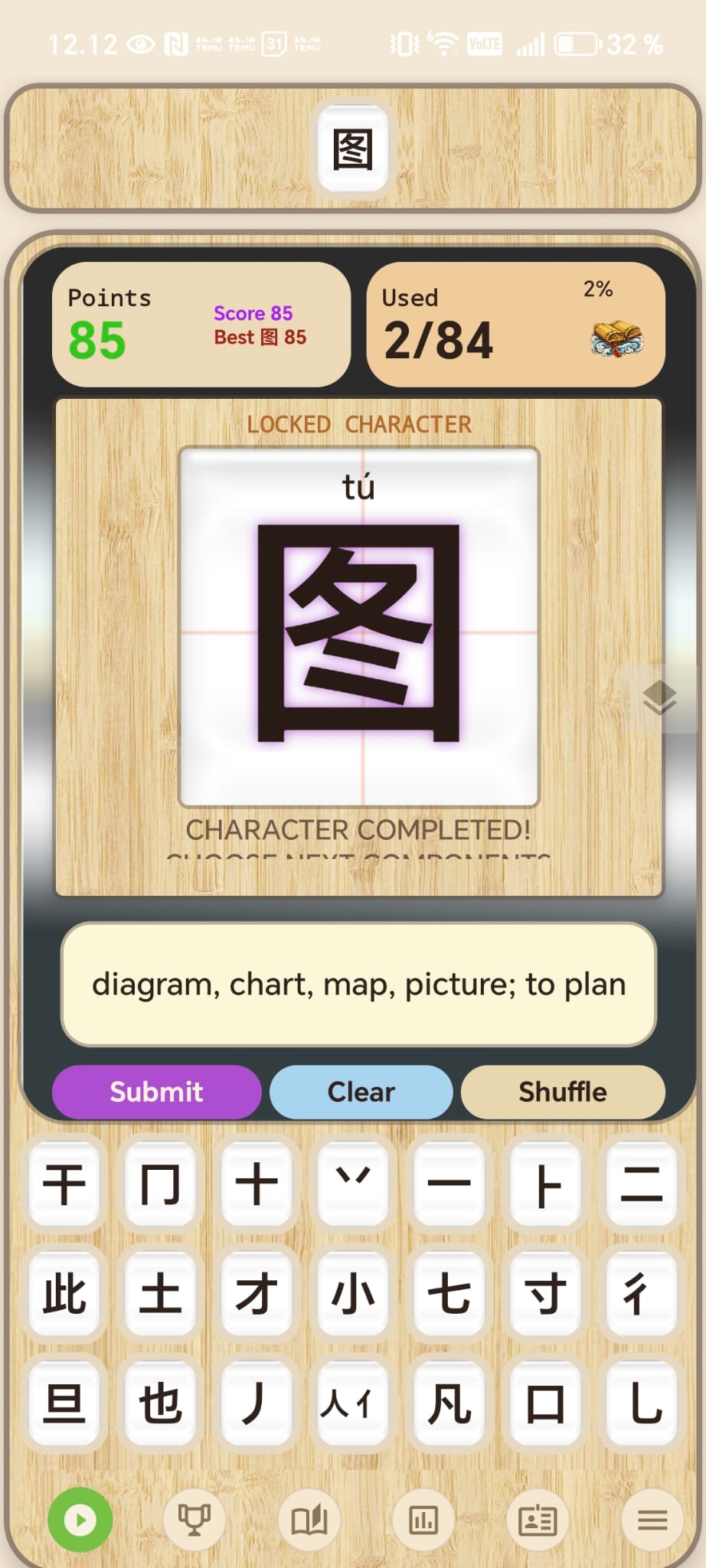
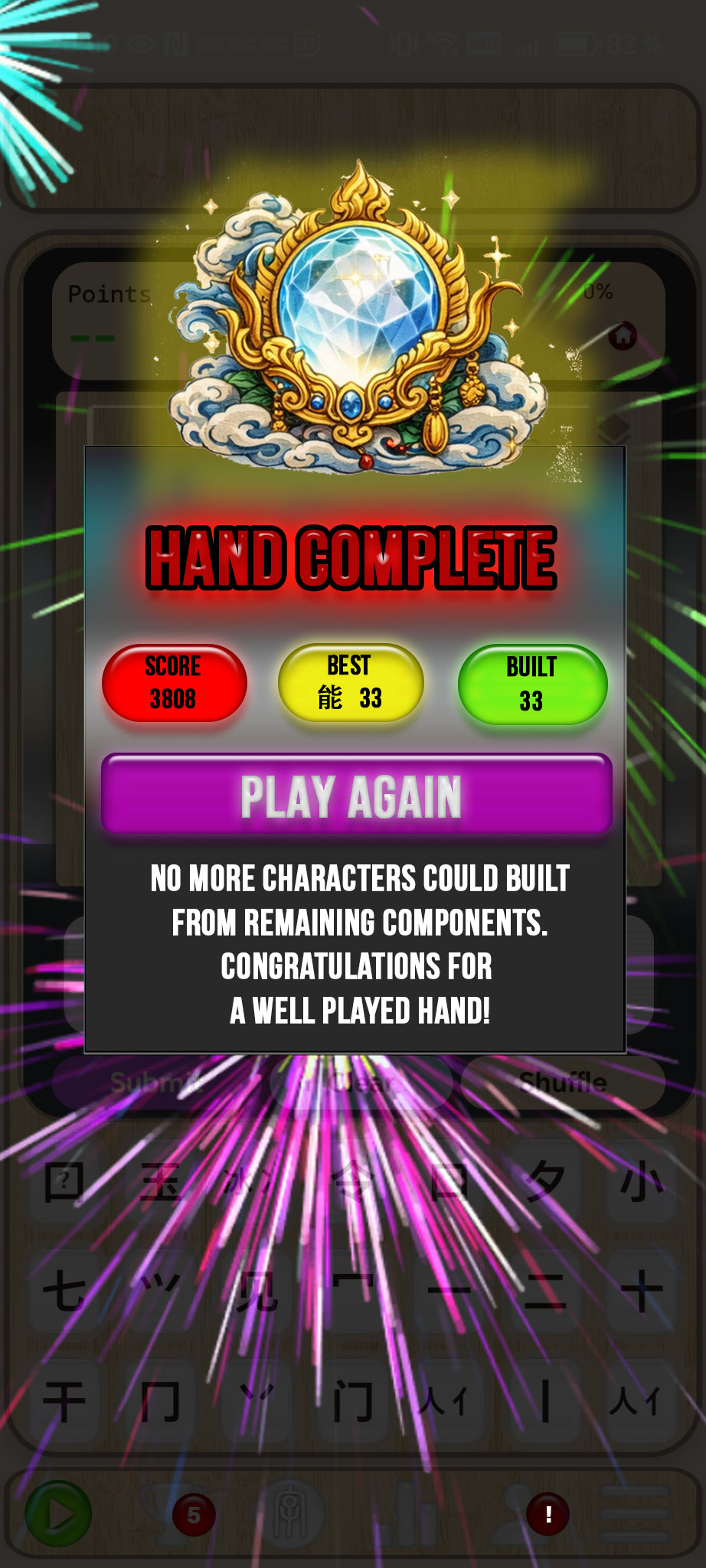
Screenshots from recent builds. In-game visuals continue to evolve.
Hanzi Forge tracks your progress against the thirteen rungs of the Chinese imperial examination — from 童生 Tongsheng (junior scholar) all the way to 状元 Zhuangyuan (top graduate). Each rank you earn unlocks objects in your Scholar's Studio: brushes, jade pieces, a seal-of-office, a peacock in the garden, a stringed pipa in the library, your robes of office in the imperial hall. Sixty-plus collectibles in five connected rooms.


Each piece carries a short note — what it was, who used it, why it sat in a scholar's room. Some objects are also doorways: the imperial decree and key in the Library is what carries you from study to court.


Your profile shows the rank you've earned, your best hand, the HSK range you're playing in, and how far you are along the imperial ladder. The character library keeps every character you've ever assembled — sortable by recency, by rarity, by radical, or by component parts. It's a quiet record of real learning, not a streak.
No leaderboards. No social pressure. Just the work, and what you have to show for it.


Pinyin input is fast, but it has a cost: fewer writers can recall characters by hand. Using one language's input to represent another isn't translation — it's transformation, and some of the richness is lost in the move.
Hanzi Forge offers an alternative path: play that leans into the inherent structure of Chinese. You learn characters by building them from their actual parts, not by rote. Over hands, over seasons, the writing system stops feeling foreign and starts feeling like a system with rules you know.
The game is for students, returning heritage speakers, teachers, and anyone curious about the architecture of Chinese writing. It rewards attention without punishing the curious.

Hanzi Forge is finishing closed testing. When we launch on Google Play, the link here will go live. Want to be a tester? Reach out via the support page.